

A Quiet Masterpiece in Queens: The Noguchi Museum

Tucked away in Long Island City, far from Manhattan’s noise and speed, the The Noguchi Museum feels less like a museum and more like a pause in time. It’s not a place you rush through—it’s a place that quietly slows you down.

Where Art Becomes Environment
Unlike traditional museums, this space was designed by the artist himself, Isamu Noguchi. Opened in 1985, it was the first museum in the U.S. created, curated, and installed by a living artist to showcase their own work.

Noguchi didn’t just place sculptures in rooms—he shaped the entire experience:
Light, shadow, and air are part of the artwork
The building itself—a converted industrial space—feels raw yet intentional
Indoor and outdoor spaces flow seamlessly into one another
This isn’t about looking at art. It’s about existing with it.

Molded over the course of a long career, Isamu Noguchi's definition of sculpture was shaped in part by an inherent questioning of the settings and display for sculpture and how they affected individual and communal experience of the artist's work.
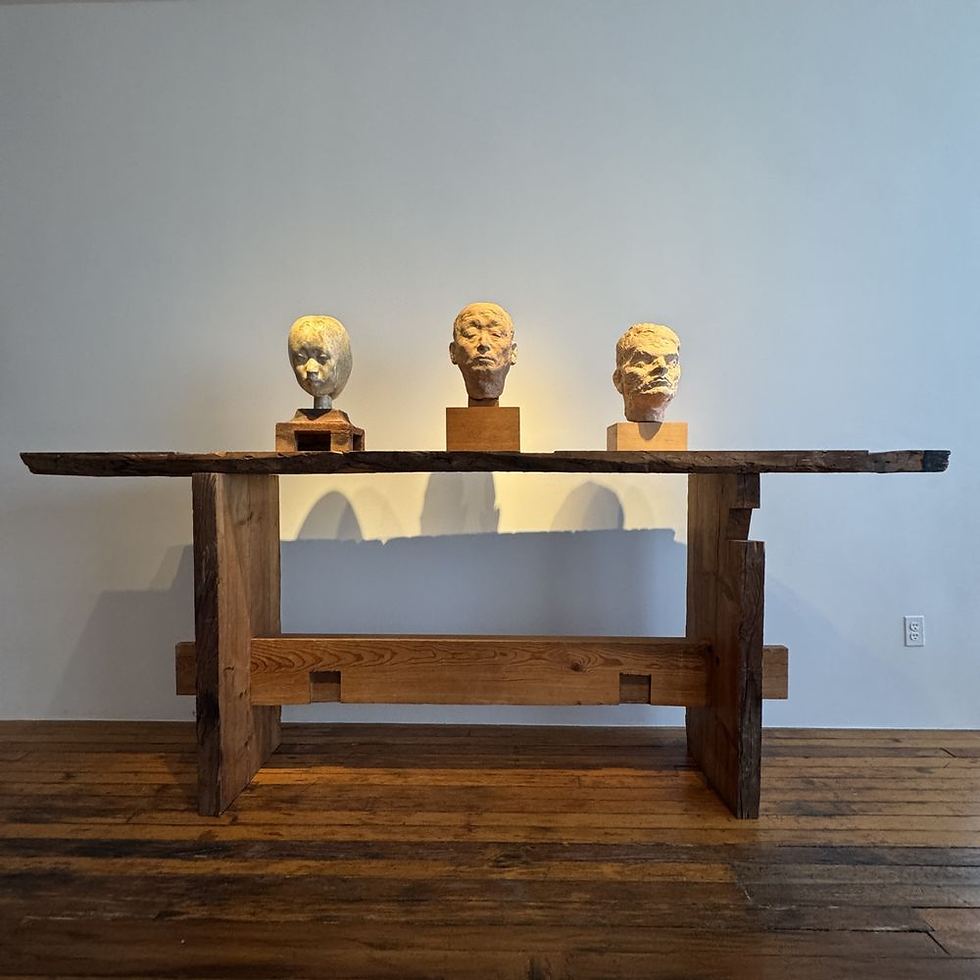
Historicizing his own artworks though, and the essential role of a museum, introduced a challenge for the living artist, especially for one who continued to draw on thematic and formal threads from his earlier periods of experimentation in his current practice.

Noguchi chose to represent these formative phases as part of his museum experiment, adapted for the museum's current setting - one that itself has been modified through necessary renovations to address time and change.

Part of the novelty that a self-funded museum devoted to his own work offered Noguchi was that he could show the sculptures he was most enthusiastic about, which coincidentally were generally regarded as too heavy and logistically difficult to be exhibited in temporary settings. Noguchi populated the ground floor, garden and so-called "floating" galleries with granite, basalt and marble sculptures made for his own pleasure at studios in Japan and Italy over the previous twenty years.

He regarded these installations as semi-permanent, using the garden as a model and metaphor for how sculpture could relate to its surroundings.
Individual sculptures were arranged as parts of a whole, in harmony with the overall environment Noguchi created, where nature, architecture, weather, light and sound stimuli might also enter into a visitor's experience.

He assembled an informal survey of themes that continually informed his work - transformation, mortality, vulnerability, weightlessness, entropy, erosion, humanity's coexistence with nature - and traced his experimentation with different materials.
His 1940s MacDougal Alley studio era was particularly well represented with interlocking sculptures in slate and marble (contrasted with later bronze and aluminum reproductions), experiments with lit elements concealed within molded magnesite that Noguchi called Lunars, carved onyx and alabaster works and a handful of excursions into assemblage.

Most museums tell you what to think. This one doesn’t.
There are fewer labels, fewer explanations, and fewer distractions. That’s intentional. Noguchi wanted visitors to form personal, introspective connections with the work .
You’ll notice:
Long pauses between pieces
Open space instead of crowded walls
A sense of calm that’s rare in NYC
It’s minimal—but never empty.


Comments